Vector Humanities

Vector Humanities


Vector Humanities Editions & Contingencies


Two open series of books

Vector Humanities publishes two series of books. Vector Humanities Editions publishes translations, made by the vector translation method, of works not yet available in English or not available in full. Contingencies publishes new short works commissioned by the series, in the humanities and in or about the vector medium. The series editor, David M. Berry, of the University of Sussex, takes on each book case by case.

Every book is free to read and download under the Creative Commons Attribution 4.0 International licence, and is published with its workings: the decisions log, the build report, and the records of the faults found and corrected between text and typesetting. A translation is also published with its literal version, so that the reader can see what the readable text was made from.

I

The Series

Vector Humanities Editions

Vector Humanities

Vector Humanities Editions

Translations

Translations made by the vector translation method. AI agents draft the text from page images twice, once as a literal version, sentence by sentence, and once as readable prose, under a translator who writes the brief, settles the terms and corrects. Each version is checked against the other and against the page images.

Every translation names its source edition, the scans it works from, and their rights status.

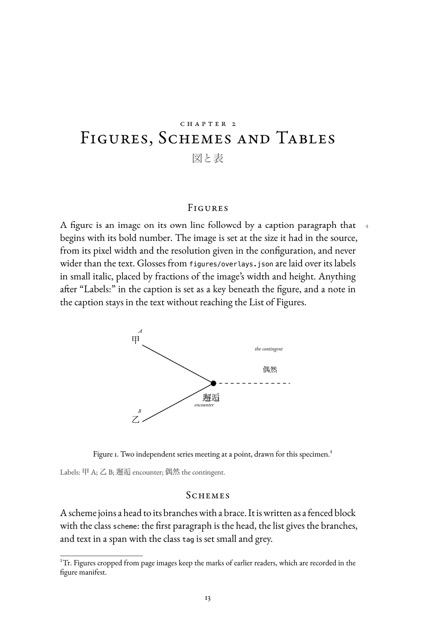
Set in Vector Book's classic design: EB Garamond on a 156 × 234 mm page, with the page numbers of the source edition in the outer margin.

A chapter opening in the classic design: a centred chapter title in spaced small capitals over text in EB Garamond
Classic

In preparation Kuki Shūzō, The Problem of Contingency · Florens Christian Rang, Historical Psychology of Carnival

Contingencies

Vector Humanities

Contingencies

New work

Short new works commissioned by the series: essays and studies in the humanities, written in or about the vector medium.

Authors keep their copyright, grant the series a non-exclusive right to publish, and release the work under CC BY 4.0. A short agreement records what the author warrants and how a correction or withdrawal is handled.

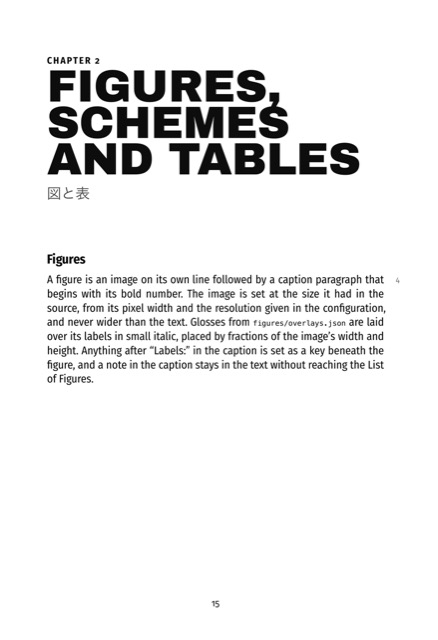
Each book is set in one of two Vector Book designs, chosen by the author: organic, a 130 × 190 mm paperback in Fira Sans Condensed with a generated field page before each chapter, or vectors, a 140 × 216 mm book in IBM Plex Serif with generated vector imagery at each chapter.

A chapter opening in the organic design: the title in huge stacked black capitals over text in Fira Sans Condensed
Organic
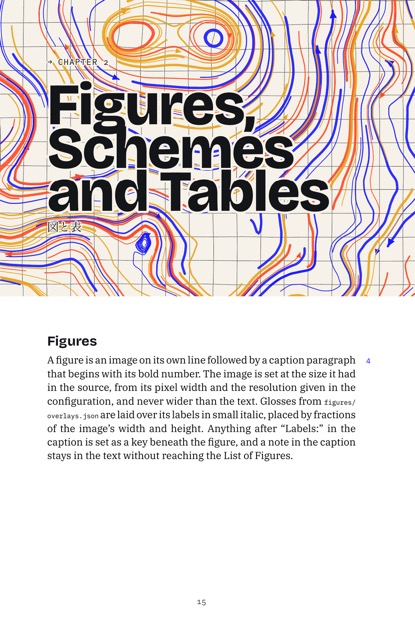
A chapter opening in the vectors design: the title set large over a band of coloured streamlines on a grid, with text in IBM Plex Serif below
Vectors

First titles to be commissioned.

Sample pages: the opening of chapter 2 of the Vector Book specimen, in each series' design, shown to scale.

II

Books in Preparation

Entries in the form a listing takes on publication. Neither book has yet been accepted into the series; identifiers are assigned as the last step before release.

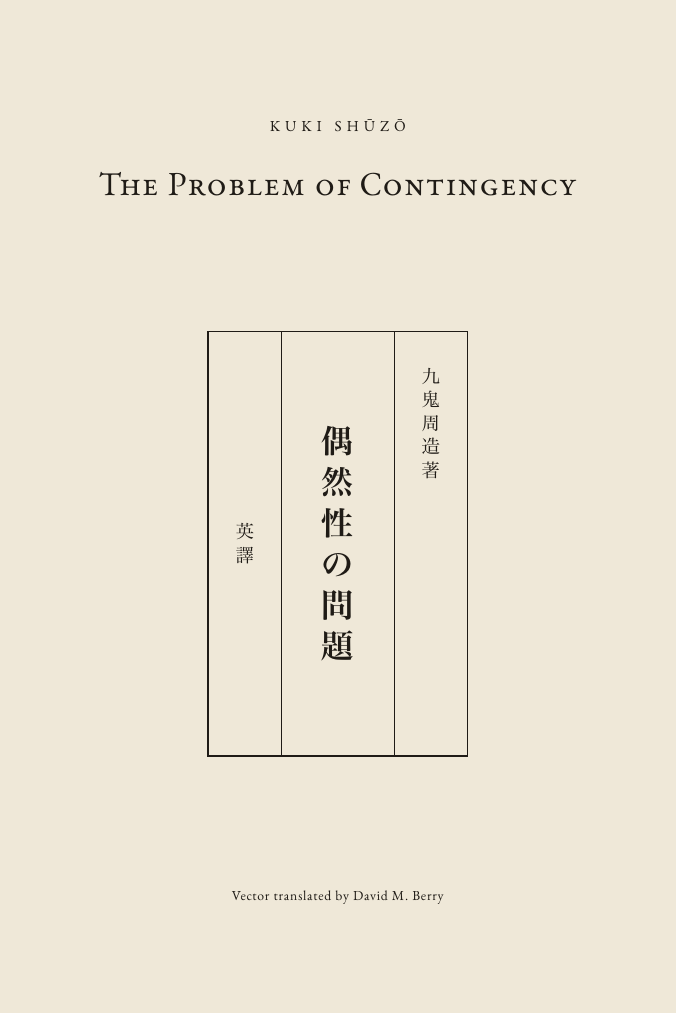
Cover: The Problem of Contingency, Kuki Shūzō, with the Japanese title 偶然性の問題 in a vertical frame
Cover, in proof

Vector Humanities Editions · in preparation

Kuki Shūzō

The Problem of Contingency

偶然性の問題 (Tokyo: Iwanami Shoten, 1935)

Vector translated by David M. Berry

Kuki's study of contingency divides it into three modes, categorical, hypothetical and disjunctive, and defines it at its centre as the encounter of two independent elements. Drawing on Aristotle, Leibniz, Kant, Hegel, Boutroux and Heidegger alongside the Book of Changes, Buddhist texts and Japanese poetry, the book moves from logic through time, wonder, art and fate to the metaphysical absolute, and ends with an ethics of encounter. The translation is made from the National Diet Library's scans of the 1948 printing and gives the whole book in English, with Kuki's figures, notes on the translation choices, a concordance with the Kuki Shūzō zenshū, an index of persons and works cited, and a glossary.

Edition
Preliminary edition, 2026
Extent
242 pages; 473 notes; 22 figures
Licence
CC BY 4.0; the Japanese text is in the public domain
Published with
Literal version, decisions log, build report, glossary
DOI · ISBN
Assigned on publication
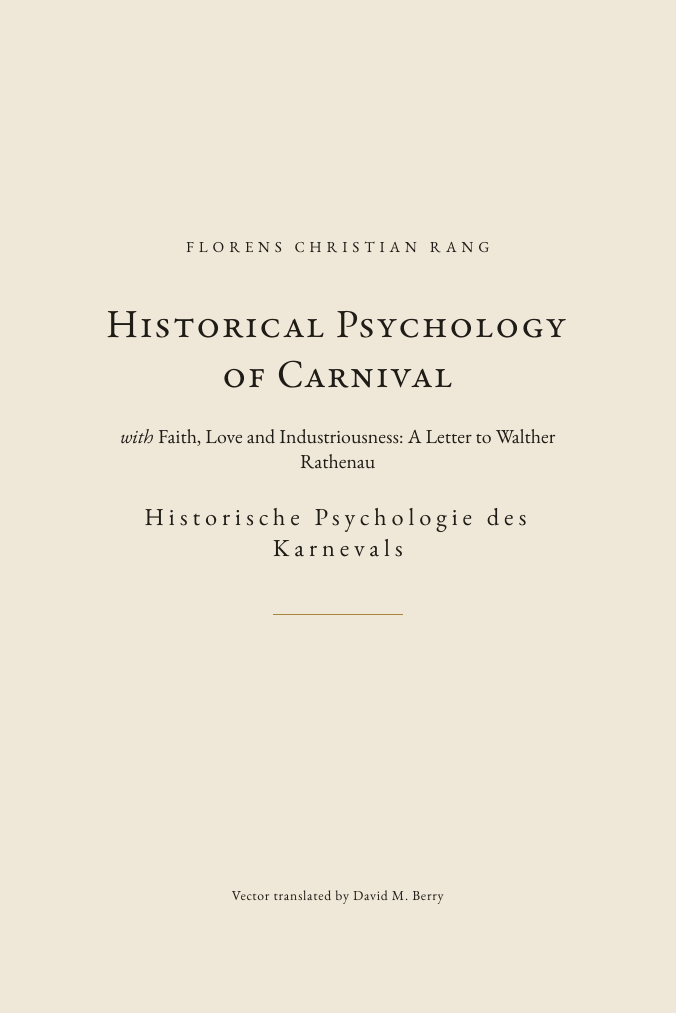
Cover: Historical Psychology of Carnival, Florens Christian Rang
Cover, in proof

Vector Humanities Editions · pilot

Florens Christian Rang

Historical Psychology of Carnival

with Faith, Love and Industriousness: A Letter to Walther Rathenau

Historische Psychologie des Karnevals; Glaube, Liebe und Arbeitsamkeit, in Die Kreatur 2 (Berlin, 1927/28)

Vector translated by David M. Berry

Two posthumous texts by Florens Christian Rang, first printed in Die Kreatur, the journal edited by Martin Buber, Joseph Wittig and Viktor von Weizsäcker: an essay on carnival that goes back, apart from its opening paragraphs, to a lecture of 1909, and a letter to Walther Rathenau dated Koblenz, May 1914. Neither has been published in English.

State
Pilot: the first section of the essay translated and typeset
Licence
CC BY 4.0; Rang's texts are in the public domain
Published with
Literal version, decisions log, build report, returns and checks
DOI · ISBN
Assigned on publication

III

From Proposal to Publication

  1. Proposal. A book is proposed from what its working folder already holds: the source edition and its rights, the state of the text, the latest build report, an outline and a sample. The series editor accepts, defers or declines it.

  2. Text. The translation, or the author's final draft, passes its own checks and is signed off as text. An author or translator other than the series editor first signs a short agreement.

  3. Typesetting. Vector Book sets the book from the same source files. Faults pass between text and typesetting as numbered returns and checks, each answered and closed.

  4. Book gate. A clean build report, no open returns or checks, and the translator's or author's sign-off. The series then writes the imprint page.

  5. Identifiers. An ISBN for each format and a DOI for the version are written into the book, which is rebuilt and checked once more.

  6. Publication. The book and its workings are published, the DOI is registered, and the book is listed here. A correction is published as a new version with its own DOI.

IV

How the Books Are Kept

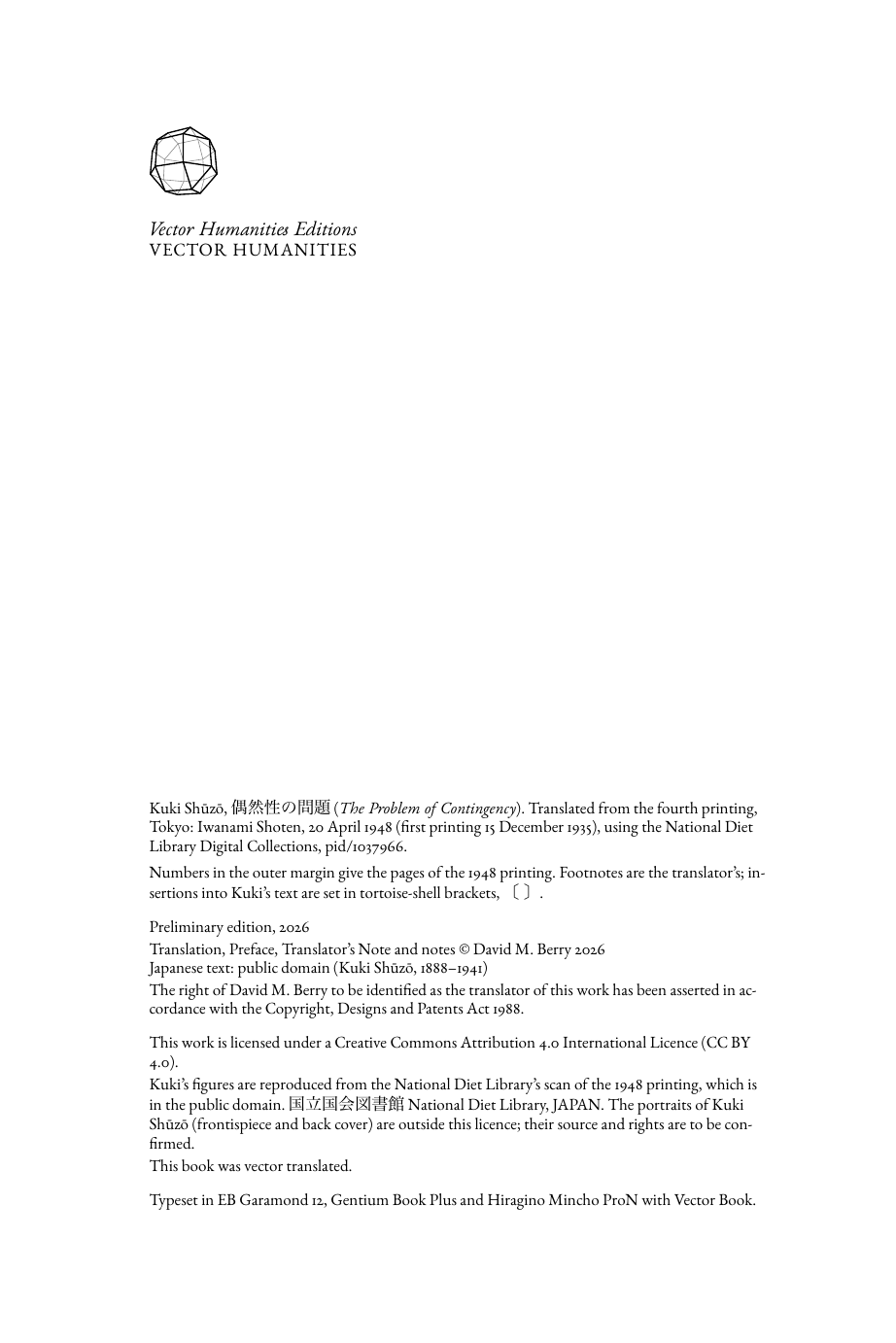
The imprint page of The Problem of Contingency: the Vector Humanities mark, Vector Humanities Editions in italic, VECTOR HUMANITIES in capitals, and at the foot the edition, copyright, licence and typesetting lines
The imprint page of The Problem of Contingency, preliminary edition, in proof. The series and publisher stand at the head; the edition, rights, licence and AI disclosure at the foot.
Open access
Every book is free to read and download under the Creative Commons Attribution 4.0 International licence. Anyone may copy, share and adapt it, including commercially, with credit. A translation of a public-domain text leaves the original in the public domain; the licence covers the translation and its apparatus.
Material from elsewhere
Material that belongs to someone else, such as an image or a long quotation, is outside the licence unless it has been cleared, and is marked as such on the imprint page.
AI disclosure
Machine drafting is identified as such. A translation states on its imprint page that it was vector translated, and its Translator's Note describes how AI agents were used and what the translator decided.
Workings
Decisions on terms, readings and corrections are logged with their dates and published with the book, together with its build report and its return and check files.
Versions
Books are published in numbered versions. Each version has its own DOI, and a further DOI resolves to the latest. Earlier versions remain available. A translation marked preliminary is complete but not yet checked against every source the translator intends to use.
Corrections
A reported fault is recorded in the book's return files with what was found, where, and what was changed, and the correction is published in a new version.